
Your team knows how much work goes into servicing a benefits client over the course of a year.
The question is: Can you prove it?
Think about everything that happens between renewals. An employee has a coverage question. HR needs help resolving an issue. A carrier needs to be contacted. Someone requests a document. There is a plan change, an enrollment question or another service issue that requires several emails and follow-ups before it is resolved.
Your account management team handles all of it. But when renewal time comes around and you want to show the client just how much your team has done for them, can you actually pull up that history?
This issue came up recently in a conversation we had with an employee benefits agency evaluating BenefitsBridge – CRM for Health Insurance Brokers. The agency knew its service team was doing a tremendous amount of work for clients, but the agency management system wasn’t giving leadership a complete picture of that activity. Emails were being sent and issues were being resolved, but much of that history wasn’t easily visible when they needed it.
What Did We Actually Do for This Client?
Think about the difference between walking into a renewal meeting and telling a client, “Our team did a lot for you this year,” versus being able to show them exactly what your team handled.
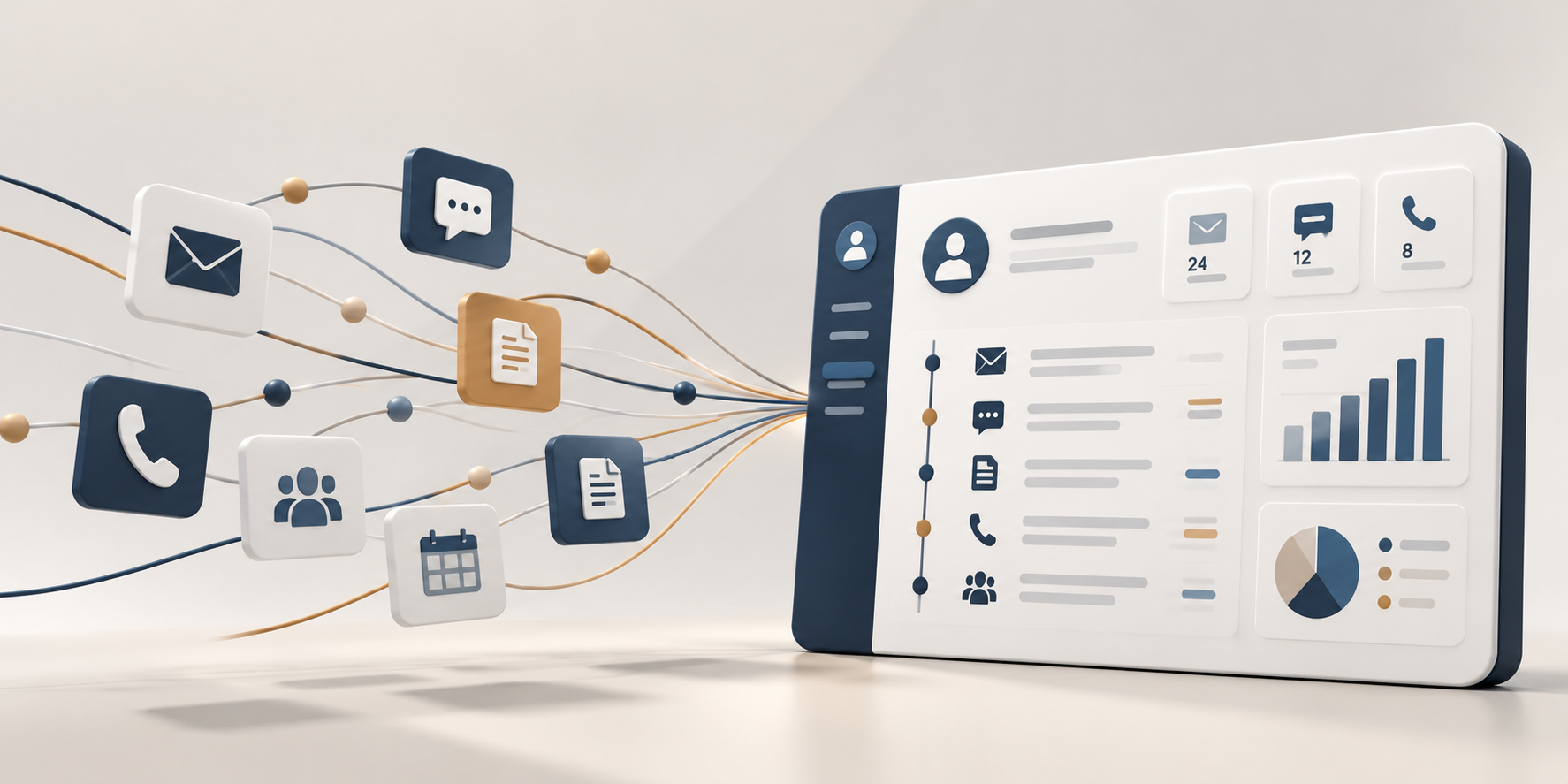
With BenefitsBridge, activities, service requests and communications can be associated with the client record, giving the agency a more complete history of the relationship. Instead of relying on an account manager’s memory or searching through individual inboxes, you can see what happened throughout the year.
- How many service requests did the client have?
- What types of issues came up?
- Who handled them?
- What communications took place?
- What was resolved?
That visibility is useful beyond the renewal meeting. It can also help agency leadership understand how much effort different accounts require. Two clients that generate similar revenue may place very different demands on your service team. Having that information available gives you a better foundation for evaluating account profitability, workloads and staffing needs.
Why Isn’t the Information in the System?
The obvious answer is to tell employees they need to do a better job of entering activities. But before assuming this is an employee problem, it is worth looking at the process you’re asking them to follow.
During our recent conversation, the agency executive acknowledged that his people weren’t always documenting everything he wanted to see. But he also explained why. Connecting emails and creating activities or service requests in the current system wasn’t easy.
For a busy service person, it was simply easier to handle the request and move on than to spend another five or ten minutes documenting what had just happened.
That’s an important distinction. If your CRM creates extra administrative work every time someone communicates with a client, getting consistent adoption will always be a challenge.
BenefitsBridge Works Where Your Team Already Works
This is one of the reasons we built BenefitsBridge on Microsoft Dynamics 365. Most benefits agencies already run a large part of their business in Microsoft applications, especially Outlook.
Your employees shouldn’t have to constantly jump between completely separate systems to keep client information current.
BenefitsBridge connects CRM and agency management information with the Microsoft environment your team uses every day. Emails, client information, activities and service requests can be part of a more connected workflow rather than information scattered across an agency management system, Outlook and individual employees’ files.
The goal isn’t to give employees another system to maintain. It is to make BenefitsBridge a natural part of how they already work so that management gets better visibility without creating unnecessary work for the people servicing clients.
Make Your Agency’s Value Visible
Benefits agencies provide a lot of value that clients never see. A problem gets resolved quickly, a carrier gets contacted, an employee gets an answer and everyone moves on.
That’s good service. But by the time renewal comes around, many of those individual interactions have been forgotten.
BenefitsBridge gives agencies a more complete view of the client relationship throughout the year. When it’s time to prepare for a renewal meeting, you aren’t starting from memory or trying to piece together the story from multiple inboxes. You already have a clearer picture of what your agency has done and the value your team has provided.
Here’s a simple test: Pick an important client and ask yourself whether you could quickly show what your agency has done for that client over the past 12 months.
If the answer is no, the problem isn’t that your team isn’t providing enough value. The problem is that the value you’re providing isn’t visible.
Reach out to us to see how BenefitsBridge can help your agency.